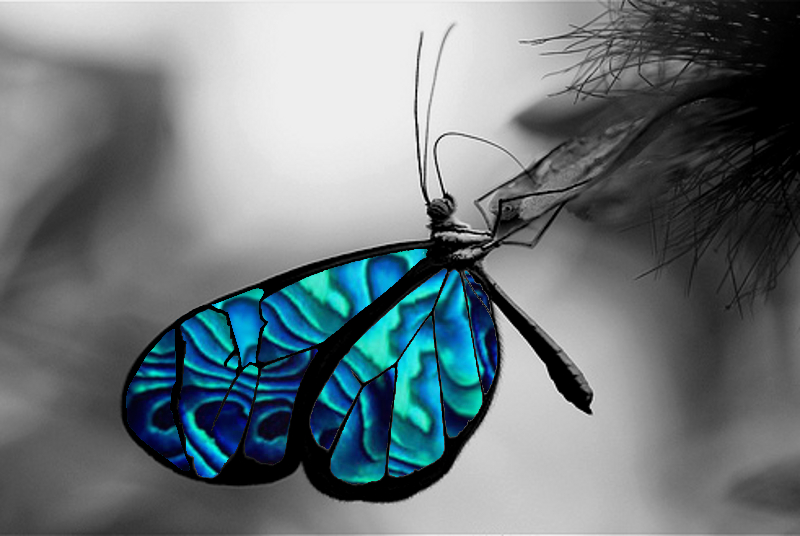
Every Diamond has a flaw. If you choose to chip at the crack, all you are left is dust. Ask yourself would you rather dwell in dust, or celebrate the way that the light plays amongst the shards, in infinite ways, refracted and gleaming, uniquely glinting as no other may play. Or, dwell upon the crack, and watch it all blow away.
I have within the last 14 months walked from the Netherlands to
Santiago de Compostella (2450km), from Madrid to Sahagun (320km), and
from Porto to Santiago de Compostella (240km)... A grand total of
3010km on behalf of Charity Water and those that they support
worldwide.
It has been both an illumination and inspiration, not only for
myself, but those whom I touch daily, as we speak and travel about water
issues facing us as a planet. I can not tell you what a pleasure it is
to do this on Charity Water´s behalf, and every kilometer has been worth the
struggle, as the inordinate support and benevolent spirit of all those I
have met shines forth, like a great beacon of love unto the world.
I carry 20kgs, on average 20km per day (a little more sometimes if
the feet are up to it) and for the most part in all weathers and
conditions. I do this as an act of solidarity with those who live in
water sparse regions who carry on average the same load each day, just
for their personal and familial water requirements.
There has not been a single occasion in all those months and all
those kilometers where I have been refused water when I have asked for
it, and I have asked for it a LOT. Never has it been refused. For I think there
is something quite instinctual within each of us that recognizes that
without water, nothing is possible, and that ´WATER IS LIFE´.
I hope that you will join with me and give generously to this
wonderful charity, who are doing such incredible work, and changing the
lives of countless communities and human beings by making fresh,
potable, water available in places where only water starvation, and
disease born from the lack of it, existed.
Please feel free to donate to Charity Water... who are doing incredible work across the planet to bring the most basic requirement of life to millions of people who are still without this most obvious of human necessities.
Okidoki... I have created a blog to accompany the walk I am presently on, and invite you all to share and follow me on a 2000km journey from the Netherlands to Santiago de Compostela in Spain.
I am at present in Thuin, in southern Belgium, having already covered a couple of hundred kilometres, and as ever it has taken me a little while to put the blog together... but better late than never! Please bear with me whilst I fill in the gaps of the journey so far, having met and seen both wonderful folk and places, with images, poetry, and adventures to share with you all.
Please feel free to visit the blog, and you will find links to various people and places of interest there, along with a link to Charity:Water, where 100% of all donations go to water projects around the world.
I carry 25kgs, on average 20km a day, something many woman and children do on a daily basis, just to meet their daily water requirements. So hopefully this journey will in some small way highlight the need and necessity to change this plight.
Hope is a string of pearls, hurled onto the floor,
torn between the desperation and the craw.
Measured days of heartache, spoonfuls of opium scented flowers, strewn in careless abandon on bloody tiles, fake smiles, tossed to lions; Strangeness, stumbling between the shards, nothing left inside the hearth, but ashes and dead coals.
How do we string those pearls together again?
When all the threads are broken,
how does the heart find the courage to endure?
In the garden of love there are two pools,
one of joy, the other of sorrow,
one past, one, tomorrow.
Libations in the lamentations of betrayal,
The arrows dipped, slipped into the wound.
To bathe in cool streams of past regret,
dreams, turned in upon themselves.
From root to seed, that ancient tree still bleeds.
Finding the time to breathe again,
The wailing edge of sorrow,
a bough without a song.
Deep ray, the dawn comes,
and with her, bright lark,
resplendently reborn from out the dark,
settles upon your heart, with joy, once more.
Strings of pearls threaded through ancient eyes,
matriculating in the school where love never dies.
It is called mourning. Grief that comes from out the
loss, intimate loss, and though we seek to deflect it, deny, or in
anger, fail to accept it, still, in the end, it is loss, it is love. A
love that demands the truth of our sincerity, a sincerity in the grace
of that loss.
Those deep bonds of love, the intimate
vulnerability of the heart, where trust is an absolute, leave us open to
the truth of the deepest sorrow, just as they have allowed for the
greatest joy. They gnaw upon the marrow, as easily as the ecstasy they employ.
When we lose those we have loved, the depths they have dug into the
fathomless oceans of our heart, swallows us, until we too, crushed in
the darkness of that infinite blue... become those depths.
But this
is not a sign of failure or weakness, abnormality or affliction,
rather, it lends it's colours to the truth of the love we have shared,
the trust and the care, the infinite womb in the oceans of our mutual
tenderness.
How can one who has ever lost and loved ever come to a
place of forgiveness, acceptance, or the dawn of renewed hope once
more, except through the door that leads through the dark night of the
soul? One who has lost, in love, and grieved not, loved not.
Grief is a room where all fear to follow, for it is dark and hollow,
holding nothing but the sea's that we swallow; still, it is a room with
two doors.
On the outside of one, written in large dark script,
is the word, 'Loss'. On the inside of the other, written in equally dark
script, is the word, 'Hope'. Only, In that darkened place, the sanctum in
the sorrow of that infinite space, it is hard to read the writing,
without a light.
They were sweet and torrential!... The
fitful sleep of a carousel that whirls after long years of disuse;
cobwebs swept from out darkened corners, the dust brushed and removed.
From time to time I stop and pick up some fine bone china ornament or a
decorative figurine, a memory of all that has been, and fly, but for a
moment, into some long lost forgotten sky. Then all at once your suns
deep ray shines it's ceaseless way into the recesses of my mind, and I am
home again, the dust swept away in an instant as I open the window from
whence you have shone your loving balm upon my soul. Spring cleaning is
such a moment of bittersweet revelry, and though the songs of distant
days echo their sweet tunes in fragrant hallways, half lit stairwells,
nothing will quell the turning of the season, and the warm thaw of
winters cool heart. I close my eyes and walk into your light, your warm
fingers stroke these threads with imperceptible delicacy, a new day has
dawned, and warmer suns beckon me on.
These shapes and feelings, the efflorescent stealing's of my heart, the rhyme upon the tip of this feathering quill, a skill, deftly stroked upon the soul of another, my lover, whose eternity wraps her arms in the gossamer airs of night, to twinkle through the filigree's of starlight, that play upon the pages of these scripted verses, born for all the ages we have ever known, forsworn by every gratitude to each that was ever grown, a twin heart, beats time within my own. These cymbals of love, that sound upon the parchment with scratchings of earth and fire, resound within a hearth, stoked by the coals of this living desire, mark time, in sweet rhythm upon my heart, the sounding bell upon the depths, from which each feathered dip does swell, to crash upon the shore of every word that sings of this love, and speaks for two, a fusion of rebirth, forever bespoke upon wings reborn, flown between the crashing waves, the smouldering tide, the seething page, fervent words, drawn from out the ink well of this love. Words...
I think it is also that he left us such beauty, bared his soul and resonated with our own, often in less callous times. Years of hope and tenderness, before the full blush of summers harsh sun had whorled it's wicked way with us. The passing of these iconic personalities, finger scars, or more tremulous hearts than those we may know today, and so too their passing becomes our own, a thousand deaths, passing down passageways we have long since left, yet, indelibly they remain our own, filled with the remnants of all those passing moments, feelings, emotions we have known. An ocean of song, sung in a common soul, though we be different, each drop a part of the whole. In the end, every moment, every emotion meant something to us, and so in passing, perhaps, those emotions that were so vital in that time pass too... for that, though we be grateful for the beauty and shared remembrance, it is hard not to be a little sad. As someone sagaciously said: "We don't cry because we knew them, we cry because they helped us know ourselves."
You are the earth in which the seed is sown,
the silent dark, receiving every ray,
you are the night, the supple round, the fertile loam, the coddled warmth of summers glow in endless May. Wrapped in golden hue, this suckled honey, lapped upon the morning dew we lay.
You are the ashes from the forest of the fallen
the rankled cold of winters solemn deep
you are the crown on which the soul was swollen
the hope renewed, the promise that we keep.
And ever has the world unfurled her glory,
though oft that climb atop seemed all too steep.
You are the silence that bends before me,
the rolling wave that greets the salted knight,
the curl of dreams, the whisper in the hollow,
the lavish realm, the promise of the light.
Each ripple curved upon the yielding lip,
to slip into the fulsome sheath aright.
And when the yawn of death is over,
you are the revelry, the sprightly risen tune,
the morning star, the lark-full luscious clover,
rekindled in the spark'd hearth renewed.
For every day, the dark recedes, my lover,
you are the blessing of loves first dawning ray.
I heard the wind chimes call,
your tender breath blowing through the willow;
How soft the moon, the elegant sweep of your hands crushed beneath my heart and the pillow.
Was it only yesterday we sat alone?
And turned the fated rocks,
every tortured stone,
tilled from out the sodden peat
the mangled scar'd fray
of every sunken beat?
And turning... still,
the silence and the warmth of every crook,
pressed into the nook of my soul,
your emerald heart
glowing in the still night of your yearning.
How fickle this spell
that breaks upon the dawns first ray.
How low the moon,
her weary sunken brow borne far away,
caught between the rapture, and the day.
I heard the wind chimes call;
And all that frightened woe,
will not wash the sound away.
The danger with disappointment, especially when it has accompanied
sorrow, is projection. The sanctimony of the artful mental manipulations
of the mind, mendaciously matriculating from the college of the soul.
Grief is a dreadful taskmaster unless it is confronted, and while we
presume to believe only in all that has gone before, that blistered
light that once shone as stars in the nebulous universe of our
unfolding, to seek to avoid the vacuum that shapes and controls even the
greatest of these spheres is a dreadful mistake. No one wants to see
the dark, especially when one projects such light as a mask, but to
avoid the truth in the nature of that balance is simply to abdicate ones
life journey in favour of a fantastical illusion, an illusion so
powerful it blinds us to the truth of it, whilst subtly eking between
the cracks. Sorrow, uncontested, becomes a bitter sword wielded by the
blind. We say to ourselves, 'We, are light, They are dark, We are in
control, they are chaos,' the eternal polemic becomes a battle contested
in ourselves and projected upon the world, until all are separated in a
sanctimony of dis-equilibria. The courage to face the shadow, the fear,
the darkened remnants of our own grief, allows for the transcendent
moment to redress that balance in an authentic manner, so that we are no
longer forced to project a false polemic upon the world, and love can
once again form new stars in this universe we all share. All else is
illusion...
'I like it, but it is a pretty dangerous thing
to do'. Not that focussing on the jewel amidst the darkness is not
beautiful, just that to ignore the truth of the context in which that
jewel shines is to be absent in truth somehow. It is as if to say, 'all
that other stuff, it doesn't matter! we will ignore it and in ignorance
it will simply fade away'... but that rarely happens. Not only is it
semi delusional, and in a way judgemental, but it also speaks of a kind
of travesty of perception, a lack of sincerity and humility, as if you
are saying, 'that darker stuff that surrounds you, well, that doesn't
matter', but of course, it does matter. It is someone's life, and that
matters, all the tawdry little moments matter, all the quirks and hard
to bare iniquities matter, they matter because they didn't just come
from nowhere, they have a story too, and though that story is hard to
hear, though that story may be washed with pain and suffering, still it
is life, and for that person, it mattered; It mattered so much, that
they took it upon themselves in the guise of a dark shroud, one that is
hard to bare and uncomfortable to look at, but still it mattered. Yes
that jewel is beautiful, but we are not stone collectors, fashioning the
uncut gems we find in others for our own device and pleasure, rather,
accepting the darkness too, listening to it's story also, gives context
to the jewels we find, and gives honour to the life we share, the whole
life, not just the parts we find easy to look at, and in so doing, we
give honour to that person we love, giving love, even to the darkness we
may find, and the stories that it tells. 'The stars shine brightly
within the firmament, set in the night as jewels upon the sky, and never
brighter were all those celestial ornaments, than when in darkness the
twinkling diamonds caught my eye.'
In this essay I will attempt to sketch the opposing
philosophies of Xunzi and that of Mencius in relation to
their divergent views on human agency. Furthermore, I will
try to show that by adopting the ‘Golden mean’, or balance,
which was elemental in the thought of Confucius, the
philosophical forefather to both these philosophers, a far
more cohesive and syncretic view of human agency, in tune
with the modern reality of genetic predisposition and
environmental influence, is manufactured. Thereby
answering some of the oldest questions, and the most
fundamental in both modern Political and Social philosophy,
not to mention the Ethic adopted in public policy, by
ideologues and politicians alike. It is hoped that by adopting
the Intuitive understanding gleaned by Mencius, and
combining it with the more studious craftsmanship of Xunzi,
a true sage may be brought to light.
Mencius asks us to perform a thought experiment:
“Suppose someone suddenly saw a child about to fall into a well: everyone in such a situation would have a feeling of alarm and compassion- not because one sought to get in good with the child’s parents, Not because one wanted fame among their neighbours and friends, and not because one would dislike the sound of the child’s cries. From this we can see that if one is without the heart of compassion, one is not human. If one is without the heart of disdain, then one is not human. If one is without the heart of deference, then one is not human. If one is without the heart of approval and disapproval, one is not human. The heart of compassion is the sprout of benevolence. The heart of disdain is the sprout of righteousness. The heart of deference, is the sprout of propriety. The heart of approval and disapproval is the sprout of wisdom. People having these four sprouts is like having four limbs. To have these four sprouts but to say of oneself that one is unable to be virtuous is to steal from oneself.“
This is quite a long quote, but within it can be found
the heart of Mencius entire assertion that human beings are
innately good. Now the opening premise is a thought
experiment, and leads on to some subtler explanations later
on in the piece. Mencius asks us to consider a situation in
which “suddenly” we are placed in a situation where the life
of a small child is at risk and we have the capacity to do
something about it. The use of the word suddenly is quite
important here I believe here, as does D. C. Lau (2), for in
using this word Mencius has attempted to circumvent those
that would argue the toss with him concerning any form of
mental deliberation. Rather it is an instinctive reaction on the
part of the person seeing this travesty that wells up from the
innate nature of the person. It is a spontaneous reaction.
It is peculiar that today I was presented with just such an
occurrence, and I mention it only by way of a more practical
example of this instinctive feeling. I was wandering back
from the shop when a small white dog bounded across the
road towards me, it was being hailed by its owner, but was
obviously oblivious to the concern that this person had for its
safety. It headed directly toward me with an innocent joy that
young dogs are want to express. I attempted to reach down
to pet the dog, but it was keen to forestall its capture. At this
juncture I noticed that it was heading back towards the road
and at that moment a car was travelling quite quickly up the
road and it appeared to me that a tragic accident was about
to take place. I felt an immediate and unsettling feeling well
up inside me, and all I could do was to yell as loudly as I
could the word ‘No’, in some vain attempt to stop the
catastrophe occurring. The dog obviously surprised by my
voice turned towards me on the verge, and the taxi swerved
slightly so as to miss the dog, a great sense of relief ensued,
and the dog now came towards me wagging its tail, oblivious
to the fact it had almost certainly avoided an untimely death.
The point here is quite obvious, when seen in relation to
Mencius’s claim concerning the spontaneous instinctual
reactions that occur within the person confronted with such a
situation. The claim is that in these moments, ones inner
sprouts are thrust to the fore without any due deliberation.
Now it is also important to note that in such moments of
instantaneous decision making no prior deliberation can be
afforded to any supposed rewards that may or may not
ensue following some act of heroism on the part of the
person witnessing the scene. This is all-important for
Mencius, as it illustrates the point that Mencius tried to
convey, namely that man's nature, prior to deliberation, was
good. Now for Mencius, it was enough to show that this
feeling or natural endowment was a beginning, a sprout, but
that this sprout could be corrupted or neglected so as to
‘wither on the vine’ so to speak.
The use of an agricultural term such as sprouts was
an intentional metaphor used by Mencius, to emphasis the
fact that although he believed these four innate hearts were
natural endowments they still required a proper environment
and selective nurturing to come to fruition. As we shall see,
Mencius was quite clear concerning the proper maintenance
of these innate endowments. Mencius stresses that each of
these four sprouts is connected to the four virtues of
benevolence, righteousness, propriety and wisdom.
D.C.Lau makes the insightful point that “the heart of right and wrong”, which I have rendered as the “heart of approval and disapproval” has a double meaning here that is
quite important. Firstly, all men are able by nature to
recognize the right and wrong, and secondly, they approve
of the right and disapprove of the wrong.
The point is not just a theoretical one, but one of practical import.
For once the distinction is made one also feels that the right should be
done and the wrong avoided. Shame is an accompanying
feature of occasioning the wrong thing when one is in receipt
of an intuitive grasp of what should and should not be done.
So we can see that there is a sense here also that one can
say that a person is by nature good. For in cases where we
do the wrong thing, we are aware of it and thus feel
ashamed and in a sense disapprove of what we have done,
whilst in cases in which we do the right thing we not only
know we have done the right thing but also approve of it. It is
in this approval and disapproval that we find the arrow of
conscience pointing to the heart that Mencius clearly
believed was innately good. So this assertion has nothing to
do with the actual actions of the person, but points to the
approval or disapproval of the person in relation to what they
intuitively know they ought to do. This again circumvents
arguments that pertain to the actual actions exhibited by
people in relation to virtuous activity.
Now Mencius by no means believed that the
aforementioned sprouts would inevitably grow within the
hearts of each person so as to create sages of each and
everyone of us, far from it, for he recognized that people are
often less than virtuous. For Mencius this had to do with the
corrupting influence of the environment.
“In years of plenty, most young men are gentle; in years of poverty, most young men are cruel.”(3)
Mencius goes on to say:
“Consider barley. Sow the seed and cover them. The soil is the same and the time of planting is also the same... Although there are some differences, these are due to the richness of the soil, and to unevenness in rain and human effort. Hence in general, things of the same kind are all similar.”(4)
The point here is that as far as Mencius was
concerned the heart of the sage and that of the common
person was one and the same kind. The things that
separated them where not the innate dispositions and nature
but rather the environmental influences, and the toil of the
human effort that was put into maintaining the healthy
growth of the original sprouts. Now for Mencius it was
important in the development of these sprouts to make sure
that one surrounded oneself with the right environment, so
as to ensure that full flourishing occurred. Surrounding
oneself with fellows whom were also on the path was an
important constituent of this environment.
“It is useless to talk to those who do violence to there own nature, and it is useless to do anything with those who throw themselves away. To speak what is against propriety and righteousness is to do violence to oneself. To say that one cannot abide by humanity and follow righteousness is to throw oneself away."(5)
Here we can clearly see that Mencius believed that to
surround oneself with people who believed themselves
incapable of being good was a great folly, and in fact a
debilitating influence upon the flourishing of ones sprouts.
Further more one needed to recognize that:
“Benevolence, righteousness, propriety, and wisdom are not welded to us externally. We inherently have them. It is simply that we do not concentrate upon them. Hence it is said seek and you will get it. Abandon it and you will lose it.”(6)
This is an important point for a couple of reasons.
Firstly it is shows us that for Mencius these virtues were
outgrowths of inner sprouts, they grew from the ‘inside out’,
not as we shall later see Xuan Tzu assert from the outside
in. Secondly, and a point that Bryan W. Van Norden aptly
emphasizes (7), concentration is extremely important in the
growth of the sprouts. The person was an active participant
in the development of the sprouts, they did not just happen
along the way. If one wished to become a sage, then one
needed to be an active participant in the development of the
growth process. This is an important point for it accounts for
another often-sited rebuttal towards Mencius. Namely, that if
each person was endowed with an originally beneficent
nature, how was it that some men where able to realize full
flourishing and others were not?
Mencius answers this quite
aptly in the above passage, and later in 6A15:
“ Gonduzi asked, ‘we are the same in being humans. Yet some become great humans and some become petty humans. Why?’ Mencius said, ’those who follow their greater part become great humans, those who follow their petty part become petty humans."(8)
And further:
“Gonduzi asked, ‘we are the same in being humans. Why is it that some follow their greater part and some follow their petty part?’ Mencius said, ‘It is not the office of the ears and eyes to concentrate, and they are misled by things. Things interact with things and simply lead them along. But the office of the heart is to concentrate. If it concentrates then it will get virtue. If it does not concentrate then it will not get it.”(9)
Here we can see that for Mencius, the person must be
an active participant in the flourishing of his sprouts. Now it
may be objected that this simply begs the question, and that
it is implausible to rest upon this premise when one might
ask why some concentrate when others do not. Here I
believe Mencius falls down slightly, but he does at least offer
the somewhat cryptic explanation that Heaven and the
environment have much to do with whether a person will be
in a position to concentrate or not. As for the environment
we can see that the person on the road to sagacity can
actively change the circumstances of his environment at
least as far as his actions allow. Yet Mencius falls back upon
the mandate of destiny emanating from Heaven as a final
backstop to his position, and for some this was simply not
sufficient. This point concerning the will of Heaven, destiny,
is an intriguing one, and I shall return to it later in the essay
in relation to genetic predisposition, and how genetics may
hold the key to some of the answers that Mencius was
somewhat remiss in elucidating. Finally it is an important
point in the philosophy of Mencius that the innate desires of
people are what is meant by the good. It is consistent with
his philosophy that such desires be attributable to an original
state of being. These desires are not selfish, but are natural
seeds from which the sprouts stem. They are the same in all
men:
“The desirable is what is meant by the good”(10)
As we have previously noted, because Mencius
believed the original nature of Humans to be Good, it is
consistent with his thesis that to follow what naturally occurs
through desire is to be true to the initial beneficent impulses
in oneself. It must be noted here though that the
self-interested Hobbesian model is not what Mencius has in
mind when he makes such a remark. Rather as we have
already noted it is the spontaneous innate disposition of
humans as evidenced by the child and the well example that
account for these desires. Mencius explicitly believes that
the Innate disposition of one is to be found in ones primary
desires and that the nurturing of them will reward one with a
natural flourishing of the four sprouts. It is of course at this
point that Xunzi has an entirely different tale to tell, and a
brief discussion of this matter will be most illuminating further
in the essay.
It now behoves us to Look at the position of Xunzi, In
relation to the Nature of man, for as we will see he had an
entirely different perspective on the matter. In this section I
shall lean heavily on the work of T.C.Kline and his paper:
“Moral agency and motivation in the Xunzi” and .C.Lau and
his paper entitled “Theories of human nature in Mencius and Xunzi”(11)
For Xunzi the natural state of affairs for each person is
that they are initially in a state of almost a-morality. Xunzi
asserts that Human nature is essentially bad. Xunzi starts
chapter 23 of his treatise by saying as much:
“Human nature is bad”(12).
What exactly does Xunzi mean by this statement
however? The answer is probably told by way of a tale that
will allow us to see from where Xunzi’s perspective is
derived. For Xunzi the natural state of affairs for man is that
which abounded before the advent of the sage kings. These
sages where able to create order and harmonious
condition’s out of a chaotic imbroglio, which ensued due to
unrestrained desires and rampant egoistic profit mongering.
For Xunzi then Human beings are born with the rudiments of
dispositions:
“The dispositions are the substance of nature. The desires are the responses to the dispositions to things.”(13)
Now the dispositions are what one might rightly call
the emotions, and Xunzi characterizes them as:
“The feelings of liking and disliking, Happiness and anger, and sadness and Joy, in ones nature are called the dispositions.”(14)
These dispositions are of themselves not entirely
important and are merely attributable to common
dispositions that are common to all people by way of an
accomplishment of heaven. It is only in the extension of
these dispositions for Xunzi that people manifest desires.
These desires are then what Xunzi concentrates upon in his
philosophy, as it is the desires, or the extension of Innate
dispositions that Xunzi claims are at the heart of his definition
of humans as innately bad.
Now Xunzi states that everybody will naturally seek
that which they desire, but because desires are many and
resources are scarce, or desires are infinite and resources
are finite, there will arise strife and disorder, as each person
aims to satisfy their desires for personal profit at the
expense of everyone else’s desires.It is at this juncture
that Xunzi points out that humans are essentially social animals.
We need to commune together, for:
“Human life cannot be without community”(15).
So we can begin to see the first part of Xunzi’s
argument about the malefic nature of human beings. It isn’t
that they are necessarily innately bad under this conception,
but that the bad nature arises from the value judgement
placed upon Humanity from without, as they exist as social
animals within a limited environmental existence. There is no
way that human beings could all satisfy their desires within
such a situation, and therefore strife and chaotic disorder
would naturally ensue as each member of this society
attempts to gain the maximum profit to satisfy their desires.
This isn’t too far removed from the current modern situation
as it exists under a capitalist system. For under such a
system personal profit is deemed to be the highest moral
calling of the collective member, and it is only economic
parameters that forestall everyone having the ability to
satisfy there lusts and desires. I shall return to this point a
little later in the closing discussion.
This is all a long way from what either Xunzi or
Mencius deemed to be the pinnacle of achievement, namely,
the ascension to sage-hood. How then, in light of these
competing desires, can a society be structured so as to
remain true to the dictates of man's social nature and yet not
diminish the ties that bind, through crushing the personal
desires of its membership?
This was a question that Xunzi saw as the most
important of his time. It is exactly this question that Xunzi
asserts was answered by the sages in the original position.
For Xunzi then this question is answered through a number
of tiers. He believed that by following the dictates of the
sages as laid down in such works as the Analects, and the
book of Odes, one could come to an enlightened position
concerning one place in society. For Xunzi, an ordered
society was constructed by careful and studious attention to
the rites as set down by the sages, and by the practice of
these rights in conjunction with practical instruction by a
teacher, who was skilled in the works themselves.
T.C.Kline points out quite rightly, it remains a problem
for Xunzi how the sages in an original position, surrounded
by a chaos and barbarism could have arrived at the position
without themselves being part of a tradition. This is indeed a
quandary for Xunzi and one that does not easily dissipate.
However let us set this aside for now, and explore some of
Xunzi other arguments.
We see then that the agricultural metaphor expounded
so often by Mencius to explain the innate sprouts
of human goodness do not hold here. Rather, Xunzi makes
his own metaphors based upon the craftsmen’s ability to
mould the natural substance into a pliable and useful item.
The desires were not to be changed internally but rather
externally. Only by skilled and active intervention is the
finished product made possible. The skilled craftsman of
course would work with the natural product not against it,
and by so doing would ensure that the raw material was
shaped and made useful through manifesting its own innate
capacities.
Xunzi believed of course, being a Confucian that the
sage was the proper result of any perfecting process and
that if one achieved this one would become the ultimate
Confucian. So by learning the classical texts, studying
music, abiding by ritual and seeking a learned teacher to
inculcate the acquired knowledge and traditions handed
down, one had the capacity to be a sage.
I should like to follow the interpretations of a number
of learned scholars at this juncture, so as to illuminate the
further refinements of The original human from ‘person on
the street’ to sage.
D.C.Lau offers the following insightful description:
“When emotions are what they are, the choosing between them by the mind is called reflection. When the mind reflects and puts our capacities to use, this is called human artifice. What is accomplished through the accumulation of reflection and the practice of the exercise of our capacities is called human artifice.”(16)
It is an important point as it marks a clear distinction
between what Xunzi saw as Human nature and Human
artifice. Lau notes that not only, what can be learned by
application and improved upon by careful analysis is Human
artifice, but also, what results by the reflection of the human
Mind can be seen as human artifice. This serves to illustrate
that there are two ways in which the mind can modify our
action. Firstly it can chart out a course of action with the
natural original capacities in mind for any particular situation
and occasion. Secondly, it can accumulate reflections
throughout historical reference that habituate our responses
to a particular plan of action, even though these may run
contrary to our original innate dispositions. By this means we
are able to practice the rites, or the learning of the rites and
in time habituate a response that moulds our dispositions in
such a way that the inculcated rites no longer become
burdensome, but rather become a natural out flowing of our
learnt or acquired dispositions.
Deliberation then becomes a vehicle for transformation,
for it is through the deliberative process that
the mind unifies all the processes into a whole. It must be
remembered here that the Chinese conception of mind was
not distinct from heart. John Knoblock rightly states:
“The habituation of custom modifies the direction of the will and, if continued for a long time, the very substance of ones original inborn nature will be altered.”(17)
Learning is an essential element of Xunzi’s philosophy
as it was indeed for Confucius, who saw it as the most
important element on the path to enlightened sage-hood:
“Loving ren without balancing it with a love of learning will result in the vice of foolishness. Loving knowledge without balancing it with the love of learning will result in the vice of deviant thought. Loving trustworthiness without balancing it with the love of learning will result in the vice of harmful rigidity. Loving uprightness without balancing it with the love of learning will result in the vice of intolerance. Loving courage without balancing it with the love of learning will result in the vice of unruliness. Loving resoluteness without balancing it with the love of learning will result in the vice of wilfulness.”(18)
What then of the charge that was levelled at Mencius
earlier, that if all men have the ability to be sages why are
some men great and others vile and mere brutes?
Xunzi quite easily defends his position by making the
distinction between possibility and actuality, and this appears
intuitively reasonable today given the common psychological
understanding of the disparity between thought or intention,
and action. He states:
"Thus, becoming a sage is something people achieve through accumulation. Someone says, sageliness is achieved through accumulation, but why is it that not everyone can accumulate in this way? I say, they could do it, but they cannot be made to do it. Thus the petty man could become a Gentleman, but is not willing to become a gentleman. The Gentleman could become a petty man, but is not willing to become a petty man. It has never been that the petty man and the gentleman are incapable of becoming each-other. However the reason that they do not become each other is that while they could do so they cannot be made to do so.”(19)
Hence we see that Xunzi quite clearly avoids the
problem of disparity between those attaining sage-hood and
those remaining vice ridden by way of reference to will, or
the Intentional action on the part of the individual to attend to
the proper course of cultivation.
D.C.Lau succinctly summarizes Xunzi’s position in
relation to human nature. the position we have illustrated
above can be summarized as follows. Human nature
consists in emotions, which manifest themselves as desires
in interaction with outside things. These desires lead to one
seeking the thing desired. Man is a social animal, but in any
society, there are limited resources. If everyone chaotically
manifested their wanton desires, then strife and discord
would naturally flourish. Fortunately the sage kings came
along and created an ordered and structured society in
which everyone had a place and there was a place for
everything.
Morality in such a society is possible because of:
1) Our minds can control the actioning or extension of the desires.
2) We are creatures that can accumulate practices and thus habituate
the correct procedures through careful following of rites that
are laid down by traditions and teachers who espouse these
rightful practices.
3) Morality is intelligible to the common man as it is to the gentleman
so that it threads itself throughout the entire structure of
society, and no one is left outside the possibility of becoming
a sage. Hence it is Inclusive.
Xunzi’s position then can be seen as heralding the
proposition that man is innately bad, based upon the 'chaotic
ramifications', desires left unchecked, would have upon
society and the environment around him. Not as some would
have us believe, because he/she harbours natural vices or
virtues, but rather it is in the extension of these unchecked
dispositions that humans can be said to be bad. Xunzi then is
most definitely pessimistic about the outcomes for a society
where proper rites and customs are not followed given that
he believes that at base, humans are creatures driven by
wanton profit, profit of self gratification.
It would seem correct to see the relative strengths and
weaknesses of the competing philosophies so that we might
come to some comfortable mean that lies somewhere
between the two philosophies of human nature.
I am of the opinion that both have their important
place in the initiation, development, and progressive
flourishing of the moral Human being. In a way, these two
arguments can be paralleled in the more modern debate
between nature and nurture. The question is whether
genetic predisposition or environmental influence has the
greatest bearing on the expression or morality in a human
being. As is true of the modern debate many genetic traits
appear to be subject to developmental timing mechanisms.
Mencius would be on very shaky ground to support a thesis
in which an infant had an innate sense of right and wrong at
birth. For it appears that this particular trait of personality is
indoctrinated, impressed upon the developing infant by
subtle forms of socialization, within family structures. Babies
will often play happily with their peers and then the very next
moment be hitting their playmates with the nearest available
toy. This doesn’t bode well for Mencius’s proclamation that
we have an innate sense of right and wrong. However
conversely it is also true that genetic predisposition has an
enormous influence on the way that babies interact with their
community, as is evidenced by numerous twin studies.
Now obviously neither Xunzi nor Mencius had any understanding
of genetics. They both took there lead from previous
traditions, and both used the concept of Heaven to account
for variable fluctuations. Xunzi may well have been correct in
his understanding of learnt dispositions, but he most
certainly wasn’t correct in asserting that everyone has the
same innate capacities, instilled in them at birth, for there is
an enormous variety of genetic drift in such variables as
learning of specific intelligence’s. It may well be the case
that morality falls within the auspices of a specific genetic
tendency, socially acceptable within a temporal dimension,
and the ability to ‘learn’ this morality is subject to
the same population fluctuations as other more specific
intelligence’s, such as visuospatial, motor co-ordination, and
the like.
Now it is certainly true that some people are born
with a greater capacity to feel emotions than others, at the
far end of the spectrum we have such anomalies as those
who suffer psychotic disorder's, or those with deep emotional empathy,
but leaving these aside for now let us focus upon the more normative.
The point is that each person is born with there own unique
perspective from which to see the world. No person’s
experience is like any other. Rather they become
conditioned to function within the social system through a
process of inculcation and en-culturation. It appears from
this stand point that neither Xunzi nor Mencius got it right.
For both emphasized the fact that all humans are born the
same.
Mencius emphasizing the fact that we are all born
with the 4 sprouts, and through a process of neglect or
attendance we are able to either lose them or create a
virtuous flourishing.
Conversely Xunzi stated that by artifice we learn to
comport ourselves with our newly acquired learnt habitations.
Neither however recognized that Human beings may in
fact have innate ‘differences’ in proclivity, and ability for
moral learning born of the genetic predisposition’s we now
know go into making up our unique structural perspective.
This argument might be levelled as the genetic existential
phenomenological argument, and it is a position I think both
philosophers would have an enormous difficulty
incorporating into their theories.
Let us place this argument aside for a moment, and
look at a number of others complaints that can be levelled at
the two philosophies. Xunzi seems to be in the unenviable
place of having to defend his position from those that would
question how it was, given his original position, in which life
was in chaos, and there was no tradition to hearken back to,
that a sage arose to ford the way? Now this need not be a
terribly intractable problem, for it could well be the
case that all one would need to be, is slightly more morally
aware than the next fellow, and given this slight morality
shift, a tradition could be formed along the lines presented
by Xunzi. David.S.Nivison defends just such a position (21).
Where he believes Xunzi might be able to appeal to the
concept of creation and still remain faithful to his original
position. He quotes from Xunzi:
“ The sage gathers together his thought and ideas, ‘experiments’ with various forms of deliberative activity, and so produces ritual principles and sets forth laws and regulations”{adapted from Watson 160}.
Here it is enough to point out that the word
'experiments' is of critical import. For it affords the sage the
ability to create new forms of practices and rites in
accordance with the times. It might here be said that this
ability of the sage to co-create the tradition that he is
perpetuating might make Xunzi’s philosophy plastic enough
to deal with the advent of new technologies such as
genetics. However, the point is that in the original position
the first sage may well have been a man barely above the
norm morally, but just enough to make the first step forward.
With each subsequent generation a further step was taken
until at some point a fully enlightened sage manifested to
sign post the way for others to follow. It is not at all clear
whether Xunzi would have gone for such an argument, as
the emphasis placed upon ritual and law within his text lends
one to believe that here was a philosophy non-too plastic in
its nature. Given his influence upon both Han Fei and Li Ssu
of the Chin court, and the Chin's subsequent harsh doctrinaire
it is difficult to believe that Xunzi harboured such liberal concepts.
The major difference though between the two is in the
area of Moral education. For Xunzi this education is
achieved from 'without', and is crafted onto the subject in a
process of drill and habituation. He emphasizes that the only
hope for the human is to drill enough morality into one that it
finally becomes second nature. Mencius, not only saw this as
a violation of ones human nature present at birth but perceived
it as antagonistic to the pursuit of a moral being.
We can see moral parallels in the modern age in
which we might wish to place both these philosophies as a
template and see which one is more to the point. Now it is
the case that we live within a closed ecosystem, and that
modern multinational companies are at present operating
under a capitalist schema, in which the bottom line is profit.
This fits nicely onto Xunzi’s schema, for in an environment in
which resources are scarce it cannot be the case that profit
is the only morality that is allowed to operate within the
global community. With a growing awareness of the
interconnectedness of ecosystems within the environment,
comes the subsequent responsibility of those multinationals
to act in a ethical manner that respects the other players in
that market place. Any failure to do this will result in the strife
torn society envisaged by Xunzi under a regime of rampant
egoism where profit was the only motive force. However,
Just as I believe it is wrong to say that Xunzi philosophy is
wholly indicative of the human condition, so to it may well be
claimed that capitalism is just as out of balance in its egoistic
pursuits, and is merely the dominant philosophy of the day
by way of historical accident.
Balance, has long been the key to understanding
many Chinese texts. It is fundamental to the philosophies
of Taoism, and the I Ching, a major Confucian text. As capitalism heralds the ideologies of rampant egoism, out of kilter with social concerns, and environmental limitations, and is focused solely upon personal and collective profit, it may be said to contravene the very balance that these philosophies appeal to. So to do the two philosophies espoused here. For either, given free reign, would be out of ‘Balance’ with the Confusion Ideal, and given that they both purport to be the natural out growth of Confucianism, it would indeed be alarming to see this occur. Perhaps the clarity of Confucius was in recognizing the necessity to open both eyes, so as to see the world clearly, for if either eye alone predominates at the expense of the other, both lose something. Stereoscopic vision only occurs when both are utilized harmoniously and in equilibrium. For this reason, balance in ones approach, whether it be the nature verses nurture debate, or the politics of intentional action, or the simple manifestation of the sage, is the best way forward when seeking right action. Any philosophy that denies this balance runs afoul of both ignorance and arrogance, both in intent and action, and for this reason, an open minded and open eyed approach, that envisions a collaboration, not as antithetical to it's prospects, but as the best way to achieve the full flourishing of them in a responsible and sustainable manner is to be preferred. Maybe in balance, one can achieve the requisite harmony that is the starting point for any progressive social morality.
The last word falls to Confucius:
“When native substance overwhelms cultural refinement the result is a crude rustic. When cultural refinement overwhelms native substance, the result is a foppish pedant. Only when culture and native substance are perfectly mixed and balanced do you have a gentleman”(22).
Bibliography.
1) Knoblock, john: Xunzi A translation and study of the complete
works. Volumes 1,2,3. (Stanford university press, 1990)
2) Chan, Wing-Tsit: A source book in Chinese philosophy.
(Princeton University press,1963)
3) Kline, T.C &Ivanhoe, Philip.J: virtue, nature, and moral agency
the Xunzi. (Hackett publishing company, 2000).
Editors as above.
4) Ed: Ivanhoe, Philip.J &Van Norden, Bryan.W: Reader in
Chinese philosophy (Seven bridges press, 2000).
Quotes.
1)Bibliography (4) page 95
2)bibliography (3) Lau. D.C: Theories of human
nature in Mencius and Xunzi. Pages 195-6
3) Bibliography (4) page 110, 6A7
4) Ibid.: Page 110, 6A7
5) Bibliography (2) page 74, 4A1010) Bibliography (4) Page 110, 6A6
6) Bibliography (3) Van Norden, Brian W: Menzi and Xunzi: two
views of human agency. PP. 103-134
7) Bibliography (4) Page 113, 6A15
8) Ibid. page 113,6A15
9) Bibliography (1) volume 3, page 140, 7B25
10) Bibliography (3) Kline, T.C: Moral agency and motivation in the
Xunzi. Pages 155-175.& Lau.D.C: Theories of human
nature in Mencius and Xunzi. PP.188-219.
11) Bibliography (4) Page 231
12) Ibid. page 230
13) Ibid. page 227
14) Ibid. page 213
15) Bibliography (3) page 202
16) Bibliography (1) page 143
17) Bibliography (4) page 34
18) Ibid. page 235
19) Bibliography (3) page 174
20) Ibid. page 174
21) Bibliography (4) page 14,A6.18
Velvet butterflies brushing their gossamer wings,
tremulous fluttering's inside my soul,
lifting from the hearth to the whole.
I feel them rise from the pit,
swirling through incandescent skies,
filling my heart with the warmth of your breath,
slipping like silk ribbons caught in a breeze,
the gentle ease, of all you have become to me.
Tickling sensations,
these trembling emanations of light,
surging through these rice paper gates,
erupting upon my face with a smile.
A brilliant star, in joyous release.
I sat in blue corners once,
masked in the mourning of some mottled solemnity,
wondering what it was that you might have been to me,
seeking that which was before my unsighted eyes,
before my heart, the chase inside,
blind to its light, in the depths of its hide.
To cease the search, and in being, simply love.
To curtail the endless courtship, the chase,
the hunt from above, and in risen heart,
watch the doe bound within the open meadow,
free from her forest retreat,
the supple greeting of each loving gracious fellow,
the swallow tail swimming in the breeze,
kissed between the sunlight's balmy phlox,
and those distant oaken trees.
Love steals my heart, and floods the plain,
and on my tongue and in my ear, I hear
this gentle wind whispering your name.
The fluttering diaphanous flight,
of these butterflies of love,
caught between the chrysalis,
and your bless'd light, above.
"I only know it gets harder every time. The world grows a little
darker, and the wind a little colder, and there comes a moment when you
wonder whether you ever felt at all. So dark and numbed by it all.
Perhaps your standing at a check out, staring blankly at the head in
front of you, waiting for your turn to dance with the plastic bags and
fake food you have bought for dinner, and there comes a moment, in the
drab monotony of that emptiness, a simple moment when all the pain in
your heart and the blocks in your head are forgotten, lost in the mist
of that nothingness, when someone says something, or you do something
quite spontaneously, and for an instant the light that is within you
breaks through.
Seize that moment. Know it for what it is, the truth of the light within you.
For that light is never extinguished. Though it be dulled by scars that
have built upon your heart, with every betrayal, every sunken hope,
though it be obscured by the towers and walls you have built in your
mind to protect your heart from the withering assault of that pain, it
burns still. It's light kindled in the depths of the deepest darkness.
It is just that, as time passes, and the tarnishing's of love set down
their slow decay, it gets harder to remember. So hard in fact that at
times, the blocks and the scars, the pain and the masks we build to
forestall it, halt the light, until, seated on the throne of our own
turbid mind, we can no longer see it's glory. No longer feel the warmth
of it's ray, as it passes inspection, obscured by all the tissues and
walls that lay between awareness and the truth.
So, in those
moments, those simple moments in which love, or communion, laughter, or a
simple gesture erupt out of you, quite beyond your conscious control,
understand that this is your soul breaking through, this is the truth of
you, the light that shone so brightly before the world and all it's
infinite betrayals got a hold of you, and twisted your vision into
blindness. Know that you are more beautiful than you might ever have
suspected, and that though you can no longer see it, still, it remains,
and in those moments of emptiness, love has a way of opening a new door.
The moon, she shines,
without favour or disguise, both,
upon the joyous and the bitter sunken eyed. The weeping pools, seeping between the corpulent shadows, tree wrung gargoyles, hung upon the bough of the midnight queen. Seldom seen, upon the fleck of cherried air, heavy in a dream, bare upon the sacred hill, where the drum and tambourine, beat upon the wind. 'I'll meet you there'! - 'I'll meet you there'! ' Where the golly goblins sprawl, between the orange scented call; 'There'! Where your hair, all tangerine, flounced upon your green eyes, moonstruck, glared into the fires feckled hue, and plucked the rosy suckle bare, to shuck the huckleberry blue. Dancing on the naked hill, the parchment and dishevelled quill, dipped into the inky well, pounced, between your painted toes, and silver bell, all crackling groans of an ancient toll; The swollen dips, the sunken lips. We learnt it well; We learnt it well.
The moon, she shines,
without favour or disguise;
The road is long, and the way is dark, without her.
The opalescence of your eyes, shimmers in Novembers pale sun, and all the world is stolen, still, in the glint of this silver thread, woven between us.
The tethered serenade of a nightingale, swims through the midnight branches, an overhang of tenderness, a canopy of moonlight, dancing amongst the shadows, the dipping lip, creased in languid motions, the teasing oceans of your warm breath, swept upon the somnolence of this summers breeze.
How solemn the death. The madness and insanity, the shattered revelry, broken in the crepuscular awakening of this suns shrill call.
How fateful the fall of that larks sweet note, the swollen throat of the broaching dawn.
And still... I love you still, though all the sea's lay between us, and time jealously guard our secret.
I close my eyes, and in that instant, your summer moon invades the winter snows, and all the frozen world about, cannot keep me out of paradise. The warmth of your touch, an oasis of moonlight, stark, against the harsh sun of reality.
And still... I love you still, and being still, you are with me.
The Lord of swiftness comes!
seated upon the dulcet silence of the rainbow,
and every naked shower that broke,
in the belly of the tumult, eased again,
clothed in the fading clouds of the thunderbolt.
How ragged the teeth, the jagged edge of death,
that sweeps across the plain of loves devoured halo.
How quickly it is rent, in the might of the foment,
while every supplicant, illumed, is swallowed below.
For ever has it been the truth, that love abides no chain,
nor bond, nor broken vow, nor frightened heart, nor shame.
In formless might, it renders all control, conceit,
to toss in fright, chaotic light, into the flame, deceit.
'Too late', I thought, 'Too late! we wait an age,
and so it seemed all hell had ascended.
Departing calm, defriended, no balm to ease love ended.
I heard the willow whisper in soothing tones,
in the midst of the yawning chasm of that fiery breech,
and it was, as if, in moonlit speech,
it soothed the tempests rage that burnt my breast,
'Come rest' she said, in silent arms,
to know that loves bequest is tranquil in it's gift.
All slag burnt away, the inconsequential waste,
tossed upon the pyre, the holy alters light,
of loves devouring fire.
'It is only fear, burnt from out the crucible of love,
that tears the soul in twain; It is only pride,
severed in the rage, tossed into the flame,
that sweeps away the thunderbolt and rain.'
How sweet the first sup of air, when smelted wroth,
departs, stripping away all doubt and fear.
How bright the dawn from out the dark well of night,
the furies hour, leaving only the intimate truth.
Redoubled, the bond made brighter, Loves herald,
seated in wing'd chariot, to descend upon each tormented lover.
Joyous contentedness, effortlessly slips between the remnants,
the salvaged sentiments, poured in mellifluous strains
through the harp strings, the heavenly reigns, held sweetly.
The Lord of swiftness comes!
seated upon the dulcet silence of the rainbow!
Loves tranquil sun, rising upon the ashes of the shadow.
And if all the world resolved, to change the loving heart, to maim the union that bore it's breast, and burst upon the living land, would it rest? Could it turn the torment of the distance, For even one second into something other than what it is? Love, incalculable, incorruptible love, the fire in our veins, the molten core of desolation! When all the walls we stoutly built, between the object and our doubt, have finally been erected, do you still believe they will stand? That they could ever have forestalled this Titans roar! this fury! What hubris! the proud mind, useless before the foments fiery breach, a fools fortress on the soil of some foreign land! Even proud Apollo, luminescent upon his bright ray of dawn, could not forestall loves glory. Though he build a universe to divide it, still the weft and the warp measure the weave! Even He! of such empyreal majesty, bows before the cherubs wing. What then of we? Mortal beings! Who vainly believe we control our destiny! What hubris destroys the tower? The triumphant hour, when every brick is smashed before the great amour, crashed upon the floor. And for what? Our choice is but to lament, or in humility, all resistance spent, sing! Surrender! Sweet Surrender! Surrender, the vulnerable truth, the tender mercy of mortal youth! Surrender, or fall... the fateful choice of lovers, all.